


499 Main Street S #81
Brampton, Ontario L6Y 1N7

Why Is My Vision Blurry Even With Glasses? | Brampton
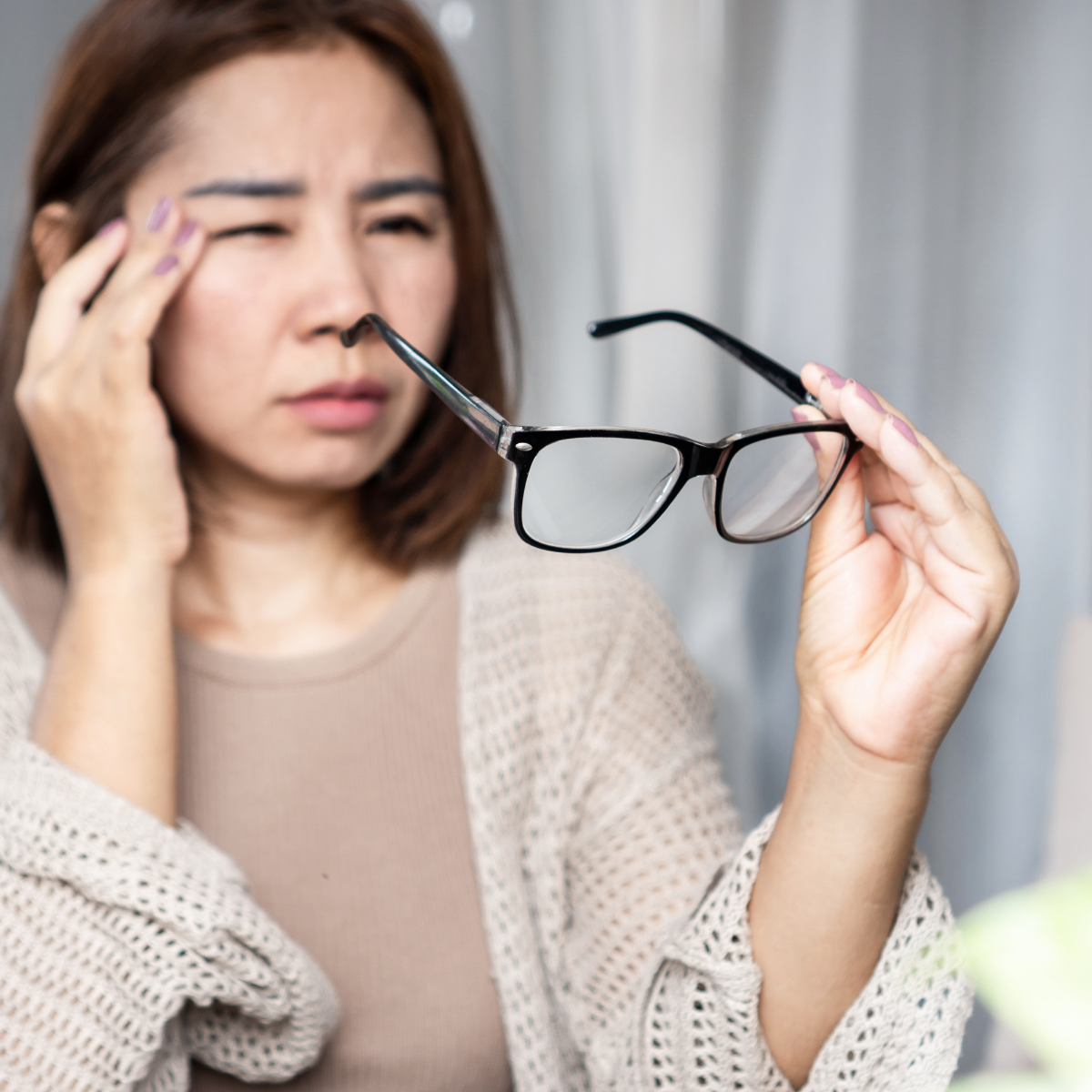
If you're wearing your glasses but your vision still looks blurry, your prescription may not be the only possible reason.
Blurry vision even with glasses can happen when your prescription has changed, your eyes are dry, your lenses aren't sitting correctly, or an eye condition is affecting your vision.
Occasional blur may be temporary, but if your vision stays blurry, keeps changing or is getting worse, a comprehensive eye exam can help determine why.
Why Are My Glasses Not Making My Vision Clear?
Glasses correct refractive errors such as nearsightedness, farsightedness and astigmatism. But your eyes and vision can change over time.
Here are some of the most common reasons you may still experience blurry vision while wearing glasses.
1. Your Prescription Has Changed
One of the simplest explanations is that your current prescription is no longer providing the correction your eyes need.
You may notice:
Blurry distance or near vision
Squinting to see clearly
Headaches
Eye strain
Difficulty focusing
Trouble seeing while driving, especially at night
Vision can change gradually, so you may not realize your glasses aren't working as well as they used to.
A comprehensive eye exam can determine whether your prescription needs to be updated.
2. You Have Dry Eye
Dry eye doesn't always feel "dry."
Your tear film helps create a smooth optical surface over the front of your eye. When it becomes unstable, your vision may become blurry or fluctuate — even when you're wearing the correct glasses.
A clue that dry eye may be contributing is if your vision temporarily becomes clearer after blinking.
Other symptoms can include:
Burning or stinging
Gritty or sandy eyes
Watery eyes
Redness
Tired eyes
Discomfort after using screens
If dry eye is causing your blurry vision, simply changing your glasses prescription may not solve the problem.
3. Your Glasses May Not Be Sitting Correctly
Sometimes the issue isn't your eyes — it's the glasses themselves.
Your vision can be affected if:
Your frames have become bent or loose
Your glasses sit too high or low
The lenses aren't properly aligned with your eyes
Your lenses are scratched or damaged
Your pupillary distance or lens measurements aren't correct
This can be particularly noticeable with stronger or more complex prescriptions.
4. You Have Astigmatism
Astigmatism can cause vision to appear blurry or distorted at both near and far distances.
If your astigmatism has changed since your last eye exam, your existing glasses may no longer provide crisp vision.
You may also notice:
Eye strain
Headaches
Squinting
Difficulty seeing at night
Halos or glare around lights
An updated eye exam can determine whether a change in your astigmatism correction is needed.
5. Screen Time Is Making Your Vision Temporarily Blurry
If your vision becomes blurry after spending hours on your computer or phone, digital eye strain may be contributing.
Long periods of close-up focusing can leave your eyes feeling tired and make it harder to switch focus between near and distant objects.
Screen use can also reduce how often you blink, which can worsen dry eye and cause fluctuating vision.
Taking regular breaks, blinking frequently and following the 20-20-20 rule may help: every 20 minutes, look at something about 20 feet away for at least 20 seconds.
6. Your Eyes Are Changing With Age
Our eyes naturally change throughout life.
After around age 40, many adults begin developing presbyopia, which makes it increasingly difficult to focus on close objects.
You may find yourself:
Holding your phone farther away
Needing brighter light to read
Struggling with small print
Experiencing eye fatigue
Seeing clearly at one distance but not another
Your optometrist may recommend reading glasses, progressive lenses or another type of vision correction depending on your needs.
7. An Eye Condition May Be Affecting Your Vision
Persistent blurry vision isn't always caused by your glasses prescription.
Conditions such as cataracts, glaucoma, retinal problems and complications related to diabetes can affect vision.
That's one reason a comprehensive eye exam involves much more than determining your glasses prescription. It also allows your optometrist to evaluate the health of your eyes and look for changes that may require treatment or monitoring.
Should I Get New Glasses or Book an Eye Exam?
If your glasses aren't giving you clear vision anymore, start with an eye exam rather than simply ordering another pair using your old prescription.
Your optometrist can determine whether the blur is caused by:
A prescription change
Dry eye
Astigmatism
Focusing changes
Your current glasses
An underlying eye-health concern
Once the cause is identified, you can determine the right solution.
When Is Blurry Vision an Emergency?
Seek urgent medical attention if blurry vision develops suddenly, particularly if it is accompanied by:
Sudden vision loss
Flashes of light
A sudden increase in floaters
A dark curtain or shadow in your vision
Severe eye pain
Significant redness
Double vision
Severe headache or neurological symptoms
An eye injury
Sudden changes in vision should not be ignored.
Book an Eye Exam in Brampton
If you're thinking, "Why is my vision still blurry with my glasses on?", don't assume you simply need stronger lenses.
Your prescription may have changed, but dry eye, astigmatism, age-related changes or an eye-health condition could also be affecting how clearly you see.
At Brampton Eye Clinic, a comprehensive eye exam can help identify what's causing your blurry vision and determine the right next step.
Book your eye exam in Brampton today and get back to seeing clearly and comfortably.
Frequently Asked Questions
Why is my vision blurry even with my glasses on?
Your prescription may have changed, but blurry vision with glasses can also be caused by dry eye, astigmatism, digital eye strain, poorly fitting glasses or an eye-health condition.
How do I know if my glasses prescription is wrong?
Signs may include blurry vision, headaches, eye strain, squinting or difficulty focusing. An eye exam is the best way to determine whether your prescription has changed.
Can dry eyes make my vision blurry even with glasses?
Yes. An unstable tear film can cause blurry or fluctuating vision even when your glasses prescription is correct. If blinking temporarily improves your vision, dry eye may be contributing.
Why are my glasses suddenly blurry?
Check whether your lenses are dirty, scratched or damaged first. If they appear fine and your vision has suddenly changed, contact an eye-care professional. Sudden or significant vision changes should be assessed promptly.
Why is my distance vision blurry with new glasses?
It can take some time to adapt to certain new prescriptions, particularly progressive lenses or significant prescription changes. However, persistent blur may indicate that the prescription, lens measurements or fit need to be checked.
Do I need an eye exam if I can still see with my glasses?
Yes. Being able to see reasonably well through your g


- Monday11:00AM - 7:00PM
- TuesdayClosed
- Wednesday11:00AM - 7:00PM
- Thursday11:00AM - 7:00PM
- Friday10:00AM - 5:30PM
- Saturday10:00AM - 5:00PM
- SundayClosed
In the Oshawa area? You can visit oshawaeyecare.com in Oshawa, ON
© 2026 Brampton Eye Clinic | All rights Reserved | Accessibility Statement | Privacy Policy
Powered by
